
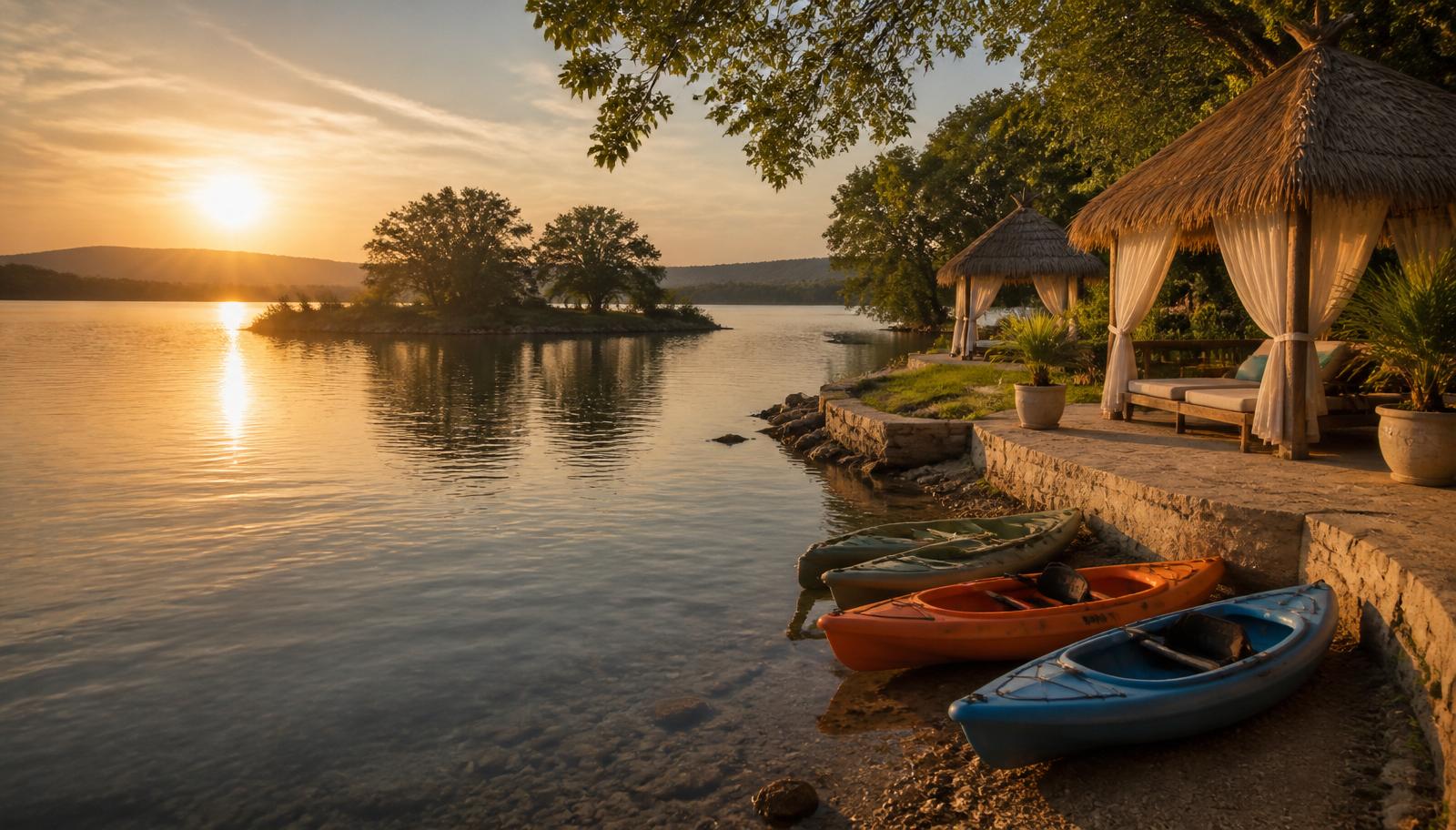
Whether you're a lifelong Houstonian looking for a quick reference, a newcomer trying to decode ZIP codes and city services, or a visitor planning your first trip, Houston rewards a little research. This guide pulls together the practical facts — geography, government services, transit, neighborhoods — alongside the cultural highlights and day trips that make Southeast Texas worth exploring well beyond the city limits, including a calm-water escape at Son's Island on Lake Placid in Seguin.
Last updated: June 25, 2026
On this page
- 1.Houston by the Numbers
- 2.Geography, Climate, and Key Industries
- 3.Houston as a FIFA World Cup 2026 Host City
- 4.Culture, Arts, and Attractions
- 5.Family-Friendly Fun and Outdoor Escapes
- 6.Houston City Services
- 7.Getting Around Houston
- 8.Houston ZIP Codes
- 9.Real Estate Insights by ZIP Code
- 10.Day Trips from Houston
- 11.Son's Island Day Escape
- 12.FAQs
Quick Answer
Welcome to Houston: A Dynamic Texas Metropolis in 2026
Houston is the fourth-largest city in the United States and the largest in the South, with a population approaching 2.3 million inside city limits and more than 7.5 million across the greater metropolitan area. It is also one of the most genuinely diverse cities on the planet — over 145 languages are spoken here, and that diversity shows up in everything from the restaurant scene to the arts calendar.
In 2026, Houston is squarely in the international spotlight as a FIFA World Cup host city, its energy sector is navigating a global transition, and its medical and aerospace corridors continue to draw talent from around the world. For residents and visitors alike, the city offers more to explore than most people scratch the surface of.
Houston by the Numbers: A 2026 Snapshot
Geography, Climate, and Key Industries
Houston sits on the flat coastal plain of Southeast Texas, roughly 50 miles inland from the Gulf of Mexico, straddling Harris County (with portions extending into Fort Bend, Montgomery, and other surrounding counties). The city covers more than 670 square miles — larger than the entire state of Rhode Island — and has no traditional zoning code, which explains its famously eclectic landscape of skyscrapers next to bungalows next to strip malls.
Climate: Houston's subtropical climate means hot, humid summers (expect daily highs in the low-to-mid 90s°F from June through September), mild winters, and a serious wet season. Hurricane season runs June 1 through November 30; residents should maintain emergency kits, know their evacuation zones, and monitor the City of Houston's emergency preparedness resources. Flash flooding is a persistent concern even in non-hurricane events — check drainage and FEMA floodplain maps before purchasing or renting property.
Economy: Houston's economy ranks among the top ten metropolitan economies globally. Its pillars include:
- Energy: The "Energy Capital of the World" still hosts more than 4,700 energy-related firms, though the sector is increasingly diversified into renewables and clean technology.
- Healthcare: The Texas Medical Center — the world's largest medical complex — employs over 106,000 people and treats roughly 10 million patients annually.
- Aerospace: NASA's Johnson Space Center anchors a thriving aerospace and defense ecosystem in the Clear Lake area.
- Port of Houston: One of the busiest ports in the Western Hemisphere, handling petrochemicals, steel, grain, and containerized cargo.
For current economic data and workforce statistics, the Greater Houston Partnership publishes annually updated reports.
Houston Quick Facts
| Topic | Key Detail | Why It Matters |
|---|---|---|
| Population | ~2.3M city / 7.5M+ metro | 4th-largest U.S. city; largest in the South |
| Area | 670+ sq miles | Larger than Rhode Island; expect long drives across town |
| Climate | Hot, humid summers; mild winters | Hydration, sun protection, and AC plans matter |
| Hurricane season | June 1 – November 30 | Have a kit, know your evacuation zone |
| Key industries | Energy, healthcare, aerospace, port | Drives jobs, traffic, and visitor patterns |
| Airports | IAH (international) & HOU (domestic) | Choose by airline and proximity to your stay |
| Transit | METRORail + bus network | Useful inside the inner loop; rideshare fills gaps |
| 2026 World Cup | NRG Stadium host venue | Plan around match-day road closures |
| City services | Houston 311 / houstontx.gov | One front door for trash, potholes, permits |
| ZIP codes | Hundreds across Harris & nearby counties | Verify boundaries via USPS lookup |
Houston as a FIFA World Cup 2026 Host City
Houston is one of eleven U.S. cities hosting FIFA World Cup 2026 matches, with games scheduled at NRG Stadium — a 72,000-seat facility that also hosts the Houston Texans and the annual Houston Livestock Show & Rodeo. The tournament brings an estimated economic impact in the billions for Texas and is drawing international visitors who may be visiting the state for the first time. Check FIFA's official site and the Houston 2026 local host committee for match schedules, transportation advisories, and fan fest information well in advance — event parking and road closures will affect commuters citywide on match days.
Experiencing Houston: Culture, Arts, and Attractions
World-Class Museums and Performance Venues
Houston's Museum District clusters more than 19 cultural institutions within walking distance of Hermann Park. The anchors:
- Museum of Fine Arts, Houston (MFAH): One of the ten largest art museums in the United States, with encyclopedic collections spanning antiquity to contemporary work.
- Houston Museum of Natural Science (HMNS): A perennial family favorite featuring a gem and mineral hall, paleontology galleries, a planetarium, and rotating blockbuster exhibitions.
- Children's Museum Houston: Hands-on exhibits designed specifically for kids 10 and under.
The Theater District downtown is the second-largest concentration of theater seats in the nation after New York City, home to the Houston Grand Opera, Houston Ballet, Houston Symphony, and Alley Theatre — all within a few walkable blocks.
Space Center Houston, adjacent to NASA's Johnson Space Center in the Clear Lake area (about 25 miles southeast of downtown), is a must for families and anyone with even a passing curiosity about human spaceflight. Tram tours go behind the scenes to active mission areas.
The Houston Livestock Show & Rodeo (held each late February into March at NRG Stadium and grounds) is the world's largest livestock exhibition and rodeo, drawing top country and pop acts alongside genuine rodeo competition. It's a quintessential Houston experience that sells out quickly — book well ahead.
Family-Friendly Fun and Outdoor Escapes
- Houston Zoo (Hermann Park): More than 6,000 animals on 55 acres; plan a half-day minimum.
- Hermann Park: Surrounding the zoo, the park offers a Japanese garden, paddleboat lake, reflecting pool, and free green space.
- Buffalo Bayou Park: A 160-acre linear park threading through downtown and the Heights with trails, public art, the cistern experience, kayak launches, and skyline views.
- Discovery Green (downtown): A 12-acre urban park hosting free concerts, ice skating in winter, movies, and a consistent family event calendar year-round.
- Kemah Boardwalk: About 30 miles southeast on Galveston Bay, Kemah offers rides, waterfront dining, and marina views — a quick half-day from the city.
- Galveston Island: The Gulf Coast's most accessible beach for Houstonians, roughly 50 miles south on I-45.
Pro tip: For more outdoor angles, the broader things to do near Houston and family getaways near Houston guides go deeper on family-focused itineraries.
A Taste of Houston: Diverse Culinary Neighborhoods
- Asiatown / Chinatown (Bellaire Blvd corridor): One of the most diverse concentrations of Asian cuisines in the country — Vietnamese, Chinese, Korean, Filipino, and more.
- Montrose: The city's eclectic, arts-forward neighborhood serves as a hub for independent restaurants, craft cocktail bars, and James Beard-recognized chefs.
- East End (Segundo Barrio): Historic Houston's Latino cultural corridor, with taquerias, Mexican bakeries, and a growing roster of contemporary spots.
- Midtown and EaDo: Younger, nightlife-forward districts where international street food and chef-driven restaurants coexist.
For current event calendars and seasonal food festivals, Visit Houston maintains an up-to-date events guide.
Navigating Houston: Government and City Services
Two distinct layers of government serve residents in the Houston area, and it's worth knowing which handles what:
City of Houston (houstontx.gov) is responsible for:
- Houston 311: Report potholes, request trash/recycling pickup, ask code enforcement questions, and track service requests via the 311 portal or by calling 3-1-1.
- Building permits and development services: Managed through the Houston Permitting Center.
- City utilities coordination and stormwater management.
- Emergency management and HPD/HFD services.
Harris County (harriscountytx.gov) handles:
- District and county courts, property tax administration (via HCAD), and county public health (Harris Health System).
- Unincorporated area services and county road maintenance.
- Elections administration.
A common point of confusion: if you live in a city-limit address, the City of Houston handles your trash pickup and building permits. If you're in an unincorporated portion of Harris County, that shifts to county and MUD (Municipal Utility District) jurisdiction. When in doubt, confirm your address status through the city's portal.
Getting Around Houston
Airports and Public Transit
Houston is served by two commercial airports:
- George Bush Intercontinental Airport (IAH): About 23 miles north of downtown; the city's major international hub, served by United Airlines' largest domestic hub operation.
- William P. Hobby Airport (HOU): About 7 miles southeast of downtown; primarily domestic routes with Southwest Airlines as the dominant carrier.
METRO (ridemetro.org) operates the city's bus and rail network:
- METRORail covers three light-rail lines: Red (Main Street from downtown to Medical Center/Reliant area), Green (east to Magnolia Park), and Purple (southeast to Palm Center).
- Bus routes cover far more of the city; use the METRO trip planner for specific routes and real-time arrivals.
- Rideshare (Uber/Lyft) is ubiquitous and often the practical choice for gaps in transit coverage.
Driving, Tolls, and Parking
Houston is fundamentally a driving city. Key highway corridors to know:
- I-10 (Katy Freeway / East Freeway): The primary east-west artery; one of the widest freeways in the world west of downtown.
- I-45: North-south spine connecting downtown to Galveston (south) and Dallas (north).
- Loop 610 and Beltway 8 (Sam Houston Tollway): Inner and outer orbital loops around the city.
- Texas 288: South to the Medical Center and Brazoria County.
Toll roads: The Harris County Toll Road Authority operates an extensive network. An EZ TAG (or compatible TxTag) is strongly recommended for visitors and residents alike — cash lanes are increasingly scarce, and using toll roads without a transponder results in invoiced tolls plus fees. Get yours at hctra.org.
Parking downtown: Street meters are enforced aggressively; garages near Discovery Green, the Theater District, and Minute Maid Park are generally the safest bet. Apps like ParkWhiz and SpotHero allow advance booking.
Biking and greenways: Buffalo Bayou Park has paved trails, and the Brays Bayou Greenway extends from Midtown to Barker Reservoir. Bike-share (BCycle Houston) operates docked stations around the inner loop.
Houston ZIP Codes: Understanding the City's Layout
Key Neighborhoods and Their ZIP Codes
Houston uses hundreds of ZIP codes across its sprawling footprint. Below is a representative list of commonly referenced areas. Always verify current boundaries and full ZIP code lists through the USPS ZIP Code Lookup tool, as boundaries can shift.
| Area / Neighborhood | Representative ZIP Code(s) |
|---|---|
| Downtown Houston | 77002 |
| Midtown | 77004 |
| Museum District / West U (north) | 77005 |
| Montrose | 77006 |
| Washington Corridor | 77007 |
| Heights (north) | 77008 |
| Heights (south) / Woodland Heights | 77009 |
| East End / Second Ward | 77011 |
| Third Ward | 77004 / 77021 |
| East End / Gulfgate | 77023 |
| Memorial / Spring Branch | 77024 |
| River Oaks | 77019 |
| Texas Medical Center | 77030 |
| Galleria / Uptown | 77056 / 77057 |
| Energy Corridor (west) | 77077 / 77079 |
This table covers major reference points; the full Houston ZIP code list runs considerably longer and includes suburban communities like Katy, Sugar Land, Pearland, and The Woodlands that carry Houston mailing addresses despite being separate municipalities.
Real Estate Insights by ZIP Code
Filtering by ZIP code is the fastest way to narrow a Houston property search. Both Zillow and Redfin allow map-based search by ZIP; treat their automated estimates as a starting point rather than an appraisal.
Critical Houston-specific considerations before buying or renting:
- Floodplains: Check the FEMA Flood Map Service Center for your specific parcel. Harvey-era events changed flood designations for thousands of properties.
- Property taxes: Texas has no state income tax; property taxes compensate. Effective rates in Harris County commonly run 2–2.5% of assessed value.
- School districts: Houston ISD covers much of the city, but popular neighborhoods like West University Place (77005) and Bellaire sit in separate municipal school districts.
- HOA and MUD fees: Many suburban areas involve Municipal Utility District surcharges on top of standard taxes.
Beyond the City Limits: Day Trips from Houston
Coastal Escapes and Nature Adventures
Houston's position on the coastal plain puts a diverse range of natural environments within easy reach:
- Galveston Island (~50 miles, ~1 hour via I-45 S): Gulf beaches, the historic Strand District, Moody Gardens, and the Galveston Island Historic Pleasure Pier.
- Brazos Bend State Park (~60 miles, ~1 hour via US-59 S): Alligators in their natural habitat, serious birding, 90 miles of hiking and biking trails, and the George Observatory.
- Huntsville State Park / Blue Lagoon (~70 miles, ~1.25 hours via I-45 N): Piney Woods swimming on Lake Raven; the Blue Lagoon spring-fed pool nearby draws swimmers seeking clearer water.
- Lake Conroe / Sam Houston National Forest (~65 miles north, ~1–1.25 hours via I-45 N / TX-105): Marinas, pontoon rentals, fishing, and forest trails on the north side of the metro.
- Big Thicket / Beaumont (~90 miles, ~1.5 hours via I-10 E): The "biological crossroads of North America" offers hiking through genuinely wild terrain, pitcher plant bogs, and rare biodiversity.
Houston Day Trips Compared
| Destination | Approx. Drive | Best For | Watch-Out |
|---|---|---|---|
| Galveston Island | ~1 hr (I-45 S) | Gulf beaches, family rides, Strand history | Peak-season traffic and parking |
| Brazos Bend State Park | ~1 hr (US-59 S) | Wildlife, birding, easy hiking | Reservation recommended on weekends |
| Huntsville SP / Blue Lagoon | ~1.25 hr (I-45 N) | Piney Woods swimming, clearer water | Blue Lagoon access can be limited |
| Lake Conroe / Sam Houston NF | ~1–1.25 hr (I-45 N) | Boating, fishing, forest trails | Boat rentals book up fast in summer |
| Big Thicket / Beaumont | ~1.5 hr (I-10 E) | Quiet wilderness, biodiversity | Bring bug spray; long sun exposure |
| Son's Island (Seguin) | ~2.5–3 hr (I-10 W, traffic-dependent) | Reserved private-island cabana day on calm lake water | Longer drive, but a more controlled private island water-day experience |
Houston Water-Day Options
| Option | Water Type | Best For | Crowd / Planning Notes |
|---|---|---|---|
| Galveston beach | Gulf surf | Quick beach fix, kids in shallow surf | Crowded on summer weekends; parking can be slow |
| Kemah Boardwalk | Bay-front, no swimming | Boardwalk rides, waterfront dining | Family-friendly, ticketed rides add up |
| Lake Conroe | Reservoir | Boating, jet skis, marina day | Boat traffic; reserve rentals well ahead |
| Public river floats (Texas Hill Country) | Spring-fed rivers | Tubing, party-leaning crowds | Can be packed and rowdy on summer weekends |
| Son's Island (Seguin) | Calm lake | Reserved cabana, families, multi-gen groups | Capped daily passes — fewer crowds, more controlled |
Related guides: day trips from Austin and family-friendly getaways near San Antonio for travelers stitching together a longer Texas loop.
A Different Kind of Houston Day Trip: Son's Island
Son's Island — Private 3.5-acre Day Resort on Lake Placid, Seguin, TX
Roughly 2.5–3 hours from Houston via I-10 West, traffic-dependent
For families or groups who have spent a summer fighting parking at Galveston or watching the crowds pile up at the Comal and Guadalupe river outfitters, there's a quieter option worth the slightly longer drive. Guests rent lakeside cabanas by the day on calm, swimmable lake water, with kayaks, paddleboards, rope swing, and water slide included on-site.
- Private 3.5-acre island day resort
- Calm, swimmable lake water
- Reserved cabanas by the day
- Kayaks & paddleboards
- Rope swing & water slide
- Volleyball & grilling space
- Capped daily passes
- Family-first atmosphere
Best for: Houston families and groups who want a reserved, calm-water, private island-style day trip instead of a crowded public beach, river float, or state park.
For Houston families who want the water-day experience without a 6 a.m. departure to beat the crowd or a car packed like a supply convoy, that kind of pre-reserved, contained setting is genuinely different from anything closer to the city. The drive back on I-10 East is straightforward, even after a full day in the sun — see directions to Son's Island from Houston and Son's Island day pass questions before you go.
The Bottom Line
Houston rewards the effort to understand it — its scale, its diversity, and the sheer range of what's available within a few hours' drive make it one of the most practical bases in the country for both urban living and weekend adventure. Whether you're navigating city services for the first time, narrowing a real estate search by ZIP code, or planning a day trip that trades the typical Texas river crowd for a quieter stretch of lake water, the city and the region around it have more options than most visitors expect.
Plan a calm-water day trip from Houston
Looking for a water-day escape beyond the usual Houston options? Son's Island gives families and groups a private island setting on Lake Placid with reserved cabanas, calm water, kayaks, paddleboards, a rope swing, volleyball, and space to spend the day together.
Ready to plan your day?
Book early — weekends fill up fast in the Texas Hill Country.
Frequently Asked Questions
How big is Houston, TX, and what makes it stand out among U.S. cities?+
Houston is the fourth-largest city in the United States and the largest in the South, with a population approaching 2.3 million inside city limits and more than 7.5 million across the greater metro area. It covers more than 670 square miles — larger than the entire state of Rhode Island — and sits on the flat coastal plain of Southeast Texas, roughly 50 miles inland from the Gulf of Mexico. One of the most genuinely diverse cities on the planet, Houston has over 145 languages spoken within its limits, and that diversity shows up in everything from its restaurant scene to its arts calendar. Its economy ranks among the top ten metropolitan economies globally, anchored by energy, healthcare, aerospace, and one of the busiest ports in the Western Hemisphere.
What ZIP codes does Houston, Texas use?+
Houston spans a large number of ZIP codes reflecting its more than 670 square miles of city territory across Harris County and portions of Fort Bend, Montgomery, and other surrounding counties. Because the city has no traditional zoning code and a sprawling, eclectic layout, ZIP codes vary widely by neighborhood and district. For a current and complete list of Houston ZIP codes, the City of Houston's official website at houstontx.gov and the U.S. Postal Service's ZIP code lookup tool are the most reliable and up-to-date sources.
What are the top attractions and things to do when visiting Houston?+
Houston offers a packed menu of world-class experiences. The Museum District clusters more than 19 cultural institutions near Hermann Park, including the Museum of Fine Arts Houston (one of the ten largest art museums in the U.S.), the Houston Museum of Natural Science, and the Children's Museum Houston. The Theater District downtown is the second-largest concentration of theater seats in the nation after New York City, home to the Houston Grand Opera, Houston Ballet, Houston Symphony, and Alley Theatre. Families shouldn't miss Space Center Houston near NASA's Johnson Space Center, or the Houston Zoo's 6,000-plus animals on 55 acres. For outdoor escapes, Buffalo Bayou Park offers 160 acres of trails, public art, and kayak launches, while Discovery Green hosts free concerts and events year-round. Day trips to Kemah Boardwalk (~30 miles southeast) and Galveston Island (~50 miles south) are easy half-day or full-day additions.
Where can I find information about Houston city government and services like trash pickup or pothole repair?+
The City of Houston's official website — houstontx.gov — is your central hub for government services. For everyday needs like reporting potholes, requesting trash or recycling pickup, or asking code enforcement questions, residents can use Houston 311 either through the online portal at houstontx.gov/311 or by simply dialing 3-1-1. Building permits and development services are handled through the Houston Permitting Center. The site also links to emergency preparedness resources through the Office of Emergency Management (houstontx.gov/oem), which is especially important given Houston's active hurricane season running June 1 through November 30.
Is Houston one of the FIFA World Cup 2026 host cities?+
Yes — Houston is one of eleven U.S. cities hosting FIFA World Cup 2026 matches. Games are scheduled at NRG Stadium, a 72,000-seat facility that also hosts the Houston Texans and the annual Houston Livestock Show & Rodeo. The tournament is expected to bring an economic impact in the billions for Texas and will draw international visitors who may be coming to the state for the first time. Fans can check FIFA's official site and the Houston 2026 local host committee for match schedules, transportation advisories, and fan fest details. It's worth planning well ahead, as event parking and road closures will affect commuters citywide on match days.
What neighborhoods in Houston are best for food and nightlife?+
Houston's food scene is one of its most underrated assets nationally, and several distinct neighborhoods stand out. The Asiatown/Chinatown corridor along Bellaire Blvd is one of the most diverse concentrations of Asian cuisines in the country, spanning Vietnamese, Chinese, Korean, Filipino, and more at every price point. Montrose is the city's eclectic, arts-forward hub for independent restaurants, craft cocktail bars, and James Beard-recognized chefs. The East End (Segundo Barrio) is Houston's historic Latino cultural corridor, known for taquerias, Mexican bakeries, and a growing roster of contemporary spots. Midtown and EaDo are younger, nightlife-forward districts where international street food and chef-driven restaurants coexist. For current event calendars and food festivals, Visit Houston at visithoustontexas.com maintains an up-to-date guide.
How can I search for real estate listings by ZIP code in Houston, TX?+
The draft recommends checking FEMA floodplain maps and the City of Houston's drainage resources before purchasing or renting property — a smart first step given that flash flooding is a persistent concern even outside hurricane season. Houston's eclectic landscape (no traditional zoning code means skyscrapers can sit next to bungalows next to strip malls) makes neighborhood-by-neighborhood research especially important. For searching actual listings by ZIP code, major real estate platforms such as Zillow, Realtor.com, and HAR.com (the Houston Association of Realtors' local MLS portal) allow you to filter by ZIP code across Houston's Harris County core and surrounding counties like Fort Bend and Montgomery.
Is Son's Island a good day trip from Houston?+
Son's Island is a longer day trip from Houston — usually around 2.5 to 3 hours via I-10 West, depending on traffic — but it can be worth it for families and groups who want a reserved cabana, calm lake water, paddleboards, kayaks, grilling space, and a private island-style setting instead of a crowded public beach or river float. Because the island caps daily passes, it doesn't get overrun the way popular public river spots can on a summer Saturday, which makes it especially well-suited to multi-generational groups and families with younger kids.